

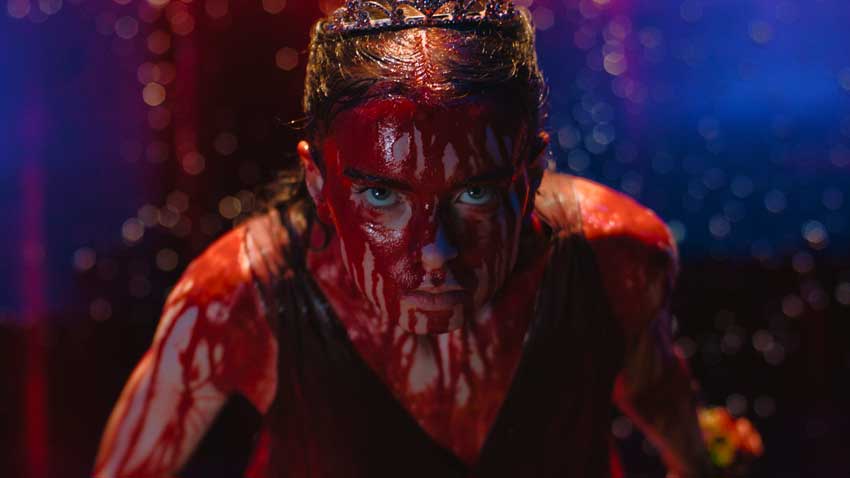
Mike Flanagan (Doctor Sleep) updates Stephen King’s Carrie for the social media age in a reimagining that honors the bones of the 1974 novel and Brian De Palma’s iconic 1976 film while making some radical changes of its own. Some of those additions are inspired, while others unnecessarily expand a tragic story that never needed a sequel. Carrie marks another trip into Stephen King territory for Flanagan, who previously adapted Doctor Sleep, the sequel to The Shining.
The new Carrie borrows more heavily from King’s novel than the Sissy Spacek movie in certain respects, particularly in its retrospective structure. The flashbacks and Sue Snell’s recollections echo the book’s unconventional storytelling, which pieced together the events surrounding Carrie White through different perspectives and accounts of the tragedy. Flanagan takes that idea and gives it a contemporary spin.
But this is far from a faithful adaptation.
Summer H. Howell bears an uncanny resemblance to Spacek’s Carrie, but she quickly makes the role her own. This Carrie is less naive and more aware of the cruelty around her. Howell retains the character’s vulnerability without simply imitating Spacek, and Carrie’s kind-hearted nature makes it difficult not to root for her even as we know where her story is headed.
Flanagan also significantly reinvents Carrie’s relationship with her mother.
Margaret White is no longer simply the terrifying religious fanatic most associated with King’s novel and the Piper Laurie incarnation in De Palma’s film. The series gives us a savvier version of the domineering mother whose manipulation of Carrie can be more calculated and psychologically insidious. Samantha Sloyan’s Margaret delivers a very different interpretation of the character, making the mother-daughter dynamic feel familiar without repeating what came before.
Both actresses shine and give this reimagining its emotional center.
Another standout is Alison Thornton as Chris. Rather than portraying her as a straightforward mean girl villain, the series gives Chris a more conflicted edge shaped by dysfunction within her own family. It doesn't excuse her cruelty toward Carrie, but it adds another dimension to a character who could easily have remained the story's stereotypical high-school tormentor.
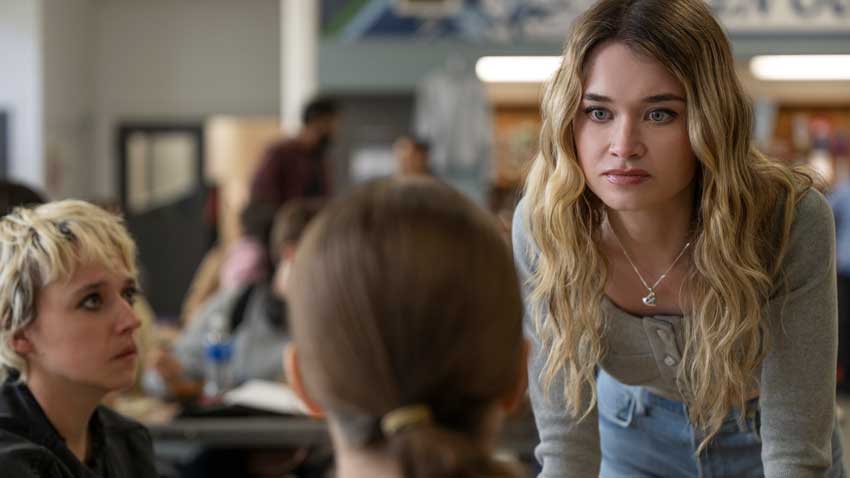
The most obvious modernization is social media.
Flanagan understands that humiliating Carrie in 2026 would be very different from humiliating her in 1974 or 1976. Bullying no longer ends when a student leaves school. A cruel moment can be recorded, uploaded, shared and replayed indefinitely.
The series can be heavy-handed in hammering home that point, but the approach is effective in maximizing the grotesqueness of the mean-girl culture surrounding Carrie. Her humiliation isn't confined to classmates witnessing it firsthand. Social media gives the cruelty an audience and allows Carrie's tormentors to turn another person's pain into content.
It's an appropriate—and disturbing—update to King's original premise.
Flanagan also expands the mythology surrounding Carrie's telekinetic abilities. This is where the series is simultaneously at its most intriguing and most frustrating. Some of the new ideas feel like clever extensions of concepts already embedded in King's novel, while other developments come completely out of left field and remain frustratingly unresolved by the finale.
The reason becomes increasingly obvious: Carrie is no longer being treated as a self-contained tragedy.
King's novel and De Palma's movie may arrive at Carrie's death differently, but both understand that the tragedy of Carrie White is precisely that—a tragedy. We spend the story watching a lonely, abused teenager briefly experience acceptance before cruelty pushes her beyond the breaking point. There is no second chance waiting for her.
The finale marks the series' biggest departure yet from both King's novel and De Palma's film, fundamentally altering the tragic finality of Carrie's story. It's certainly unexpected, but unexpected doesn't necessarily mean more effective.
Combined with the expanded mythology and several unresolved storylines, the final moments feel less like the conclusion of Carrie and more like pieces being positioned for another season. That's where Flanagan's ambitious reinvention begins to feel forced.
King's novel and De Palma's movie may take different routes toward their conclusions, but both understand that the power of Carrie lies in its tragedy. Flanagan's version makes a bold choice to challenge that finality, but in doing so sacrifices some of the devastating emotional impact that has made Carrie's story endure for more than 50 years.
All eight episodes of Carrie are now streaming on Prime Video.